
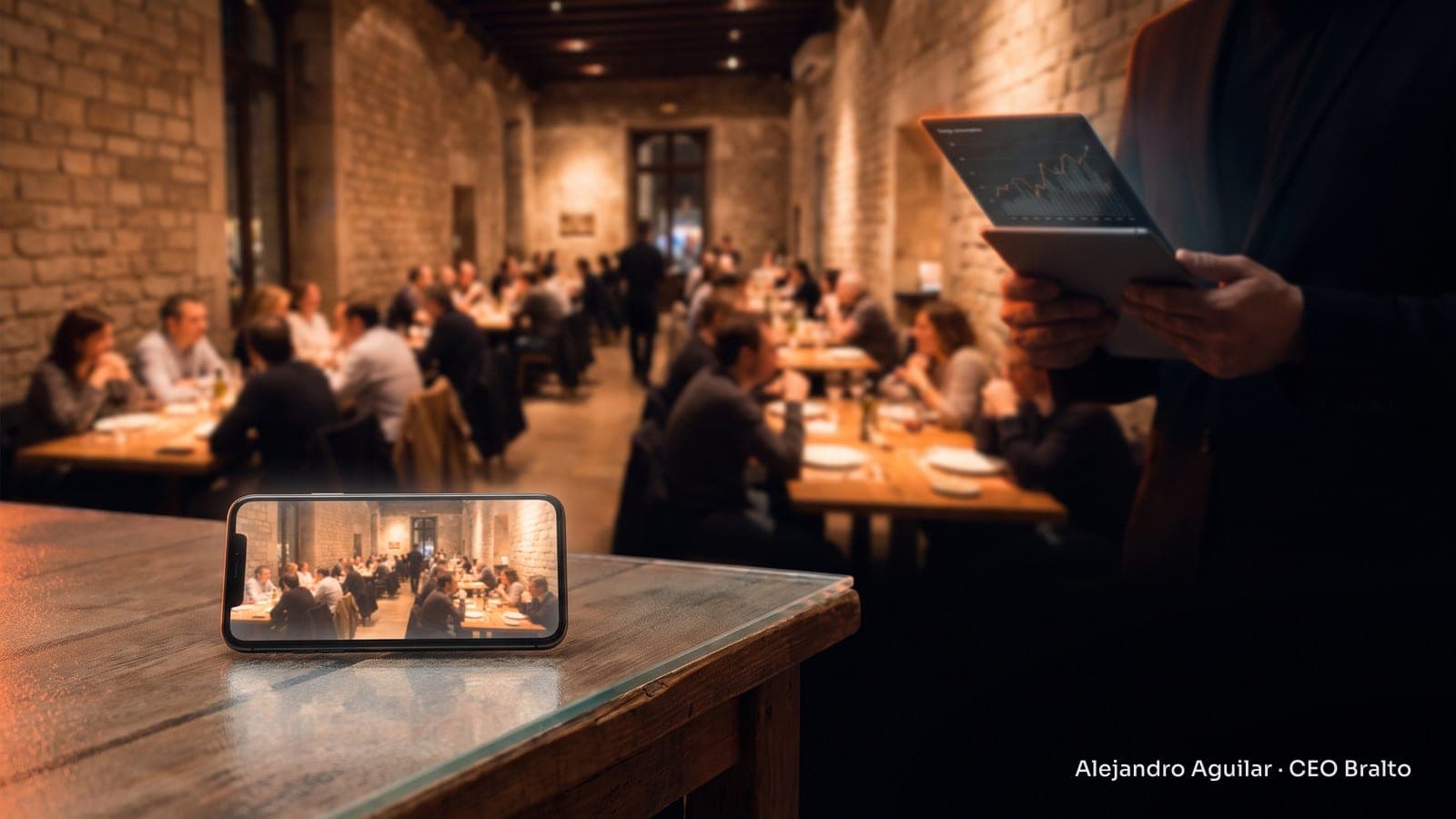
Imagine hiring an influencer to promote your restaurant. They arrive, sample the food, record crowded tables, and post a video showing how well your business is doing.
The advertising fulfills its purpose: drawing attention.
However, this time it caught the attention of an unexpected viewer: an electric utility.
That occurred in Barcelona. According to details reported by Xataka, 16 restaurants had hired influencers for promotion. The videos displayed large venues, some packed with customers.
There was a strange detail. The recorded power consumption did not seem to match the scale and activity of those locations.
Technicians at Endesa used artificial intelligence (AI) to analyze that discrepancy. They compared electricity records with the physical size of the establishments and the expected usage.
The findings raised suspicions. Inspections followed later, documenting potential illegal connections to public street lighting.
The restaurants had paid to showcase their activity. That same exposure ended up contributing to an inquiry into alleged power fraud.
Why it matters
This story highlights a capability of artificial intelligence that deserves attention: finding suspicious signals by analyzing available information.
In Barcelona, the posts showed businesses with high activity. The electrical logs told a different story.
AI helped identify that contradiction.
Yet there is an important distinction: detecting an anomaly is not the same as proving a crime. The technology helped guide the investigation. The inspections came later, and potential liabilities remain subject to official determinations.
Endesa was already using machine learning systems—a technology that identifies patterns in large amounts of data—to detect electrical irregularities.
According to background information gathered by Xataka, these tools made it possible to find electricity theft in one out of every two inspections, doubling the 2017 result.
The novelty of this case is the inclusion of content published on Instagram as part of the inquiry.
And that raises another question: how far can information that a business shares publicly be used?
The use of images is subject to rules on privacy, data protection, and platform terms. Not everything that appears on the internet can be collected or processed in any manner.
Technology creates possibilities, but it also demands sound judgment on how to use it.
What it means for your business
Consider all the information your company produces over the course of a week.
A restaurant logs purchases, sales, and ingredient usage. A retail store monitors inventory. A clinic manages appointments and payments. A repair shop receives spare parts and invoices repairs.
Each record tells a portion of what is happening.
The opportunity lies in observing how those parts relate to one another.
For example, you could compare purchased ingredients against dishes sold. Or check whether scheduled appointments at your clinic match the consultations actually conducted.
In a retail store, you could contrast recorded inventory against period sales.
These are exercises you can explore in your business, not outcomes demonstrated by the Barcelona case.
You do not need to start with a complex system either. The important thing is asking a concrete question and having reliable information to answer it.
This week, pick two records you already maintain. Compare, for instance, your company's purchases and sales over the past month. Look for any variance that deserves an explanation.
If you use AI to analyze data, review its conclusions before taking action.
The lesson from Barcelona is straightforward: sometimes, what deserves attention is not hidden. It lies in the difference between two things we can observe.