
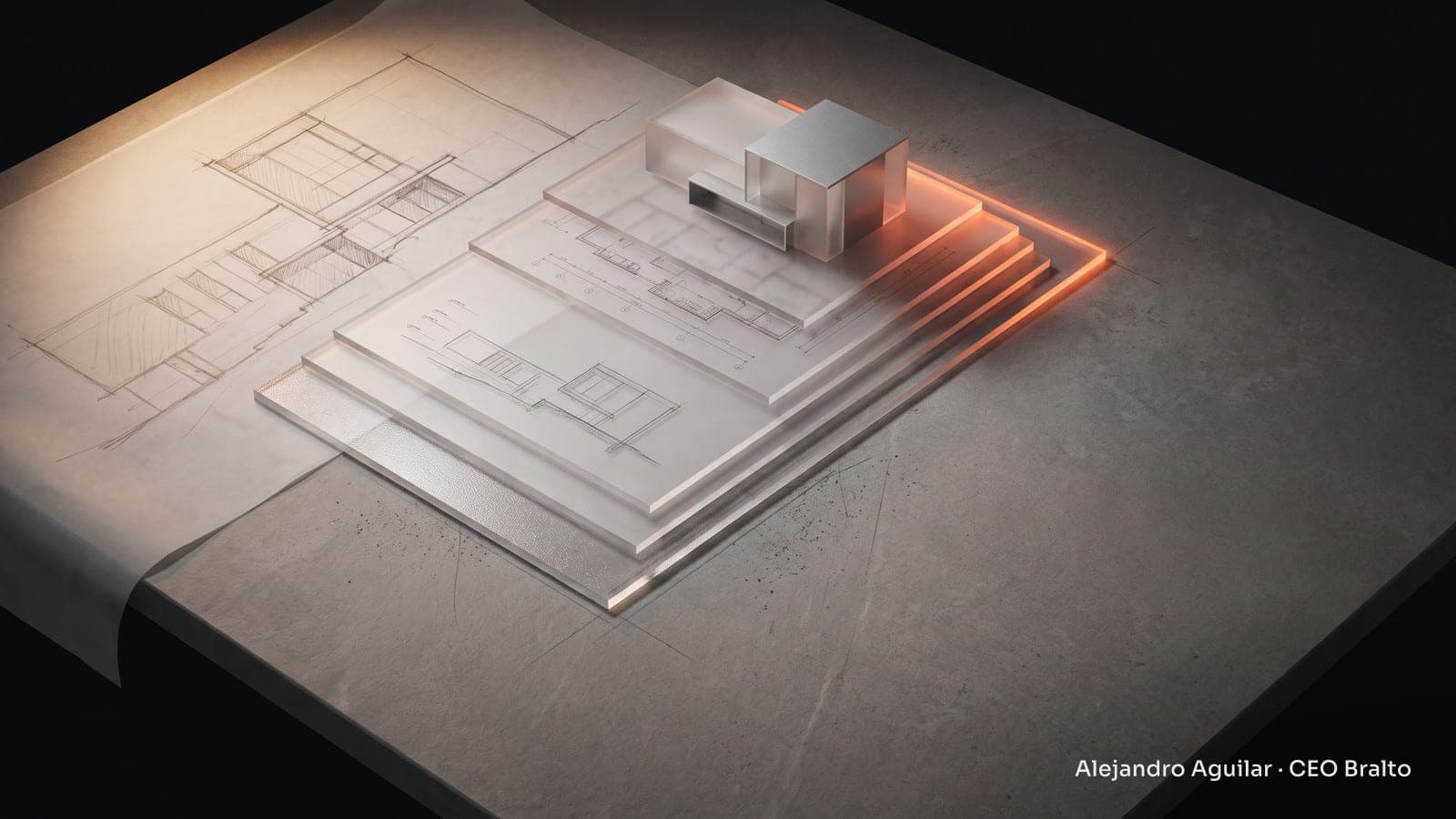
Imagine you want to expand your restaurant. You already have a vision for the new space, spoke with an architect, and even drew a few sketches. However, you still need to convert all of that into detailed plans, coordinate systems, and prepare the permit documentation.
Now picture a scenario where much of that work could be completed in minutes.
That is the promise of Blueprints AI, an American startup using artificial intelligence to turn basic drawings or PDF files into building blueprints.
Its latest version takes things further. Starting from a simple description or sketch, it can generate documentation for architectural, structural, electrical, plumbing, and other building systems. Furthermore, whenever someone updates the design, the system automatically refreshes related documents and checks them against local building codes.
Founded by architect Al Dram and Coco Cao, the company plans to showcase this update at TechCrunch Disrupt 2026. A few clients are already testing it.
Yet the most compelling aspect is not just speed. It is what happens when technology takes over tasks that used to consume most of a professional's day.
Why it matters
Consider a medical clinic looking to renovate its examination rooms. Moving a wall seems straightforward, until that single shift requires re-examining electrical setups, room layouts, and other project files.
Every modification can trigger a ripple effect of adjustments. And someone must verify that everything remains fully aligned.
Blueprints AI aims to automate precisely that painstaking process.
According to Dram, architects often spend nearly 80% of their working hours preparing documentation and barely 20% designing. His goal is to flip those percentages.
This concept carries implications that extend far beyond architecture.
When a specialist spends less time on repetitive chores, they can focus on choices requiring expertise and judgment. In real estate, for instance, that could mean giving more thought to property layout and less effort to updating drawings.
However, there is a major difference between generating documents quickly and securing construction permits.
Licensed architects must still review and validate the blueprints prior to submitting them for approval. Artificial intelligence helps produce the documentation, but it does not replace professional liability.
Nor is there proof that the tool functions seamlessly with local regulations in every municipality.
What it means for your business
If you own a construction firm, a real estate company, or an architecture practice, this technology deserves your attention. Not necessarily because you should buy it today, but because it shows how work in your industry might evolve.
And if you run a restaurant, a retail shop, or a clinic, it matters to you as well.
Every expansion or renovation project involves time, coordination, and choices that can impact your daily operations. A tool that cuts down on repetitive duties could streamline parts of that process.
Before getting overly excited, though, ask the right questions.
Does your architect already use artificial intelligence to prepare documents? How do they review modifications? Who verifies that plans comply with your local municipality regulations?
If you have a project in mind, speak with the professional in charge this week. Ask them to identify which parts of plan preparation could be automated and which will continue to require human oversight.
You do not need to purchase technology to start understanding its impact.
Sometimes, the initial advantage of artificial intelligence is not creating something brand new. It is realizing how much time we still spend on work that could be done differently.